Introduction
Startups rarely fail because of bad ideas — they fail because of poor execution.
In 2025, custom software development for startups isn’t a luxury. It’s a strategic edge.
The old way? Bloated MVPs. Long timelines. Missed market windows.
The new way? Lean builds. Faster launches. Scalable systems from day one.
The most agile teams today are cutting dev time by 60%+ with low-code tools, serverless infra, and AI-enhanced workflows — delivering better products without compromising speed.
But with so many frameworks and models, the big question is:
How do you build software that fuels growth — not burns resources?
This guide breaks it down.
Whether you’re a founder launching your first product or a CTO refining your stack, here’s what we’ll cover:
- From idea to execution-ready specs
- Selecting the right tech and architecture
- Building scalable MVPs
- Smart hiring: in-house, remote, or hybrid
- Avoiding technical debt from day one
We’ve helped 50+ startups do it right. Now, we’re handing you the framework.
Let’s build smarter.
Why Custom Software Gives Startups a Real Advantage
In today’s startup landscape, agility is a survival skill.
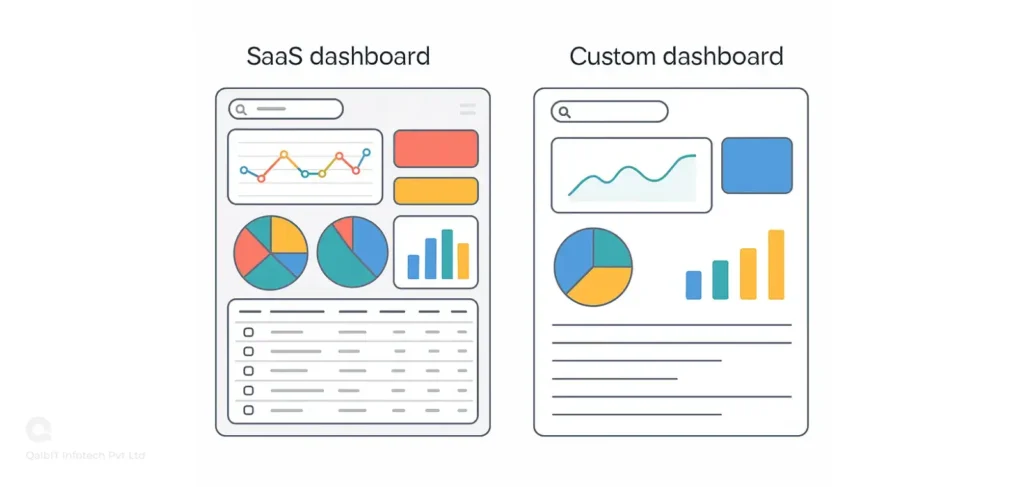
Off-the-shelf tools limit flexibility. They force workarounds, slow delivery, and hinder innovation.
Over time, they stall growth and build technical debt.
Why Custom is the Smarter Play
In 2025, more startups are investing in custom software development because it offers:
- Tailored solutions that align with your workflows
- Flexible integrations with APIs and third-party tools
- Compliance-ready structures for regulated industries
- Scalability without platform constraints
Custom software adapts to your business — not the other way around.
What About Cost?
Upfront, it can be more. But long-term, custom reduces:
- SaaS fees
- Vendor lock-in
- Costly rebuilds when you scale
Great software grows with your users — and your roadmap.
Build vs. Buy vs. Outsource – What’s Smarter in 2025?
Your software foundation determines how fast you build and scale.
Should you build in-house? Buy off-the-shelf? Or outsource?
The smartest teams evaluate based on speed, cost, and control.
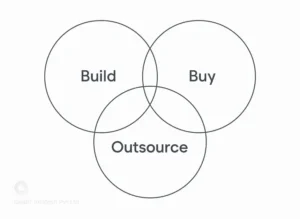
In-House
- Best for: Tech-driven startups with time and funding
- Trade-off: Slower execution, higher team overhead
Off-the-Shelf
- Best for: Simple MVPs or non-core tools
- Trade-off: Limited features, hard to scale
Outsourcing
- Best for: Startups needing expert execution without internal hires
- Trade-off: Requires alignment and a strong partner
When done right, outsourcing delivers speed with flexibility — minus the overhead.
👉 Want a deeper breakdown? Read our blog on the 3 outsourcing models startups are using to scale smarter in 2025.
The True Cost of Custom Software
Every founder asks it. Few estimate it accurately.
What does custom software cost in 2025?
Need a detailed breakdown with real-world ranges, budgeting tips, and lean startup examples? Read our full guide on what actually drives custom software cost
It Depends On:
- Scope & features
- Tech stack complexity
- Team structure
- Timeline pressure
- Security or compliance needs
Cost Snapshot
| Type | Cost Range (USD) | Timeline |
|---|---|---|
| Prototype / POC | $5,000 – $20,000 | 2 – 6 weeks |
| MVP (Lean & Launchable) | $15,000 – $60,000 | 6 – 12 weeks |
| Full Custom Web App | $40,000 – $120,000+ | 12 – 24+ weeks |
| Mobile App (iOS + Android) | $30,000 – $100,000+ | 10 – 20+ weeks |
| Ongoing Dev Partnership | $3,000 – $15,000+/ month | Retainer-based |
Offshore dev teams (e.g., India) offer excellent value when managed well.
Spend Smart
- Build what matters, not everything
- Launch lean, iterate fast
- Align with partners who deliver outcomes
UX/UI That Converts
Features get attention. Experience earns retention.
If your product is hard to use, users won’t stick around.
Why Design Matters
- Clean UI builds trust quickly
- Good UX reduces churn and increases referrals
- Design influences perceived product value
UX vs. UI
| UX (Experience) | UI (Interface) |
|---|---|
| Flow, logic, usability | Visual design, layout |
Design isn’t an afterthought — it’s a strategic driver.
👉 Want to go deeper into design-first thinking?
Read our full UX/UI playbook for startups: Why Design-First Startups Win: The UX/UI Playbook Every Founder Needs →
Tech Stack Choices That Don’t Backfire
Your tech stack can accelerate growth — or slow you down.
What to Prioritize
- Lightweight, modular architecture
- Developer-friendly frameworks
- Scalable infrastructure
- Large talent pool support
Avoid These Traps
- Overengineering
- Choosing niche tools no one hires for
- Ignoring future maintenance
Our Stack Recommendations
- Web: React, Next.js, Node.js, PostgreSQL
- Mobile: Flutter, React Native
- Backend: NestJS, Express, Laravel
- Cloud: DigitalOcean, AWS, Vercel
- MVPs: Firebase, Supabase + low-code
Cloud Infrastructure – Scalable by Default
Today’s startups are cloud-first by design.
Why? Because cloud-native platforms offer:
- Auto-scaling on demand
- Built-in compliance & security
- Faster deployments with CI/CD
- Usage-based billing to control cost
👉 Want to see how smart startups implement these principles from day one? Read our blog on building fail-less, scalable infrastructure.
Top Picks
- AWS: Enterprise scale
- DigitalOcean: Developer-friendly
- Vercel / Netlify: Frontend-first
- Firebase: Real-time MVPs
Design for portability to avoid vendor lock-in.
From Idea to MVP – Building Lean in 2025
A great MVP isn’t flashy. It’s focused.
Build just enough to learn — no more, no less.
Key Traits
- Solves one clear problem
- Built for real feedback
- Launch-ready in weeks, not months
Launching lean doesn’t mean cutting corners — it means focusing on what matters. Your MVP should validate your core idea, deliver usable value, and be scalable from day one. If you’re unsure how to move from a rough prototype to a refined product, our MVP-to-Product Growth Playbook breaks down the exact steps to go from launch to scale, complete with frameworks, case studies, and startup-tested strategies.
Team Building – In-House, Remote, or Both?
After MVP, who builds v2?
It’s not about where your team is — it’s about how they execute.
What Works
- Core strategy in-house
- Remote specialists for execution
- Agencies for speed + support
Build lean. Hire smart. Scale when ready.
👉 Curious which team model fits your startup best?
Discover the brutally honest pros and cons of Remote, In-House or Hybrid Dev Teams → Read the full guide
Avoiding Technical Debt Early
Technical debt isn’t just messy code — it’s momentum lost.
How to Prevent It
- Use clean, documented structure
- Plan for modular growth
- Don’t skip QA — even in v1
Build for change, not just for launch.
Future-Proofing – Trends That Matter in 2025
The best startups don’t just launch. They adapt.
Key Trends
- AI-enhanced development
- Low-code / full-code hybrids
- API-first architecture
- DevOps culture over roles
- Built-in compliance
The future isn’t uncertain — it’s already taking shape.
Not sure whether to choose low-code, full-code, or a hybrid for your startup? Our brutally honest guide breaks down Low-Code vs Full-Code for founders. → Read the complete guide
Choosing the Right Development Partner
Execution is everything. Choose a team that delivers.
What to Look For
- Proven startup experience
- Full-stack capabilities
- Transparent, agile process
- Post-launch support
- Cultural alignment
Why Startups Choose QalbIT
- Fast MVPs, scalable architecture
- Deep startup and product experience
- Lean delivery, no fluff
- 100+ product journeys launched
Conclusion: Build Smarter, Not Harder
In 2025, the smartest startups don’t chase trends. They build foundations.
Whether you’re validating an idea or rethinking scale — success comes from smarter execution.
Build lean. Move fast. Partner with people who care.