Written scope within 48 hours
Cloud that is boring in the best way: stable and costed.
We migrate, modernise and operate cloud infrastructure for teams who need reliability and clear costs: AWS, Azure and Google Cloud, with DevOps that sticks.
Nobody budgets for the hours already being lost. Tell us the outcome: you get a written scope within 48 hours.
48h
To a written scope
Week 1
Clickable prototype
6–14 wks
To first release
100%
Code and IP yours
Get your free estimate
Three quick questions: scope, approach and a price range back within 48 hours. No sales call required first.
Trusted by companies worldwide
- Bloomford
- Contractor Plus, Inc.
- Snappy Stats
- Ad Lunam
- Local Buzz
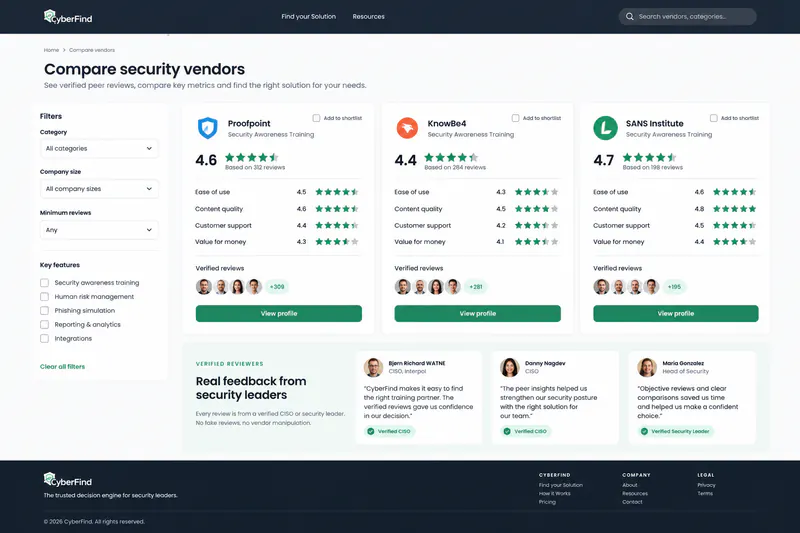
- CyberFind
- Hellory
- 5.0Clutch · 8 client reviews
- 4.9Google · 18 reviews
- Top ratedUpwork · 100+ reviews · 5K+ hours worked
- TopTracker7K+ hours tracked with clients
Why teams call us
Three ways a team ends up calling us about their cloud.
Every cloud engagement we take on starts from one of these. Recognise yours and the rest of this page gets more useful.
The bill keeps climbing
Nobody can say which service is driving the cost, so the response every month is to shrug and pay it.
Get a cost breakdown before you change anything.
The migration stalled halfway
Half of production moved off the old servers, half did not, and nobody wants to touch the parts still coupled together.
Finish the migration in slices you can verify.
Deploys are still a manual, risky event
Shipping a change means someone connecting to a server directly on a Friday afternoon and hoping nothing breaks.
Put a pipeline between your code and production.

What you actually get
Six things you can hold, not a diagram of the target architecture.
Anyone can draw an architecture diagram. These are the artefacts that land in your hands, and roughly when.
A written scope, before anything is touched
Which workloads move first, what stays where it is for now, and the rollback plan if a migration step does not go cleanly.
A cost model before the first server moves
A projected AWS, Azure or Google Cloud bill for the target architecture, so the number is known before you commit.
Infrastructure as code, not console clicks
Your environment defined in version-controlled configuration, reviewable, so a rebuild is a pull request, not a memory.
A CI/CD pipeline from day one
Every deploy tested and shipped the same way, by the pipeline, not by whoever is awake.
Monitoring and alerting on what matters
Dashboards and alerts tied to the metrics that predict an outage, not a wall of graphs nobody checks.
Documentation and a handover
Runbooks, architecture notes and a walkthrough so your team can operate the environment without us.
What it costs
Three ways to start, priced honestly.
Ranges, not single numbers, because the real figure depends on integrations and migration scope. You get the exact number in writing after one call.
Launch
One workload migrated and stabilised.
Investment
From mid four figures USD
Timeline
6–8 weeks
- Infrastructure audit and written scope
- Cost model for the target architecture
- One core workload migrated to production
- Infrastructure as code for that workload
- Monitoring and alerting on the essentials
- 30 days post-migration support
For teams migrating a first workload or stabilising a runaway cloud bill.
Start with LaunchMost chosen
Scale
The rest of the environment migrated and automated.
Investment
From low five figures USD
Timeline
10–14 weeks
- Everything in Launch
- Remaining workloads migrated in phases
- CI/CD pipeline for every service
- Multi-environment setup, staging and production
- Cost optimisation pass across the account
- Fortnightly demos and reports
For teams completing a stalled migration or formalising DevOps.
Start with ScalePlatform
A standing team that keeps the environment running.
Investment
Retainer or dedicated pod
Timeline
Ongoing
- Everything in Scale
- Named DevOps lead
- Multi-region or multi-account architecture
- Ongoing cost and performance optimisation
- Monitoring, uptime targets, on-call
- Roadmap planned quarter by quarter
For environments where the roadmap does not end at cutover.
Start with Platform
Ranges reflect projects delivered in 2025–26 and move with integrations, data migration and compliance scope. Every engagement starts with a written scope listing exactly what is included and what is not.
Our clients · reviews
Teams who trusted QalbIT
Short feedback from clients and products we work on across web, mobile, SaaS and internal tools.
- Testimonials from long-term custom software development and SaaS product clients.
- Covers ERP systems, B2B marketplaces, booking platforms, and web & mobile app development projects.
- Real text and video reviews from founders, CTOs, and product teams who partnered with QalbIT for delivery.
Video review
Rated 5 out of 5.“Working with QalbIT was an absolute pleasure. They understood our brand vision, delivered a WordPress site that is easy to navigate, and kept communication smooth throughout. I would absolutely recommend them to anybody.”
Imdad Ali KadiwalaFounder, Netzur Written review
Rated 5 out of 5.“QalbIT is a fantastic dev partner. They provide quality work, good communication and go above and beyond. Fantastic work delivered by QalbIT and his team. Can’t give enough credits with regards to how they work and at which speed they do it. Top team.”
Joost HesselberthFounder of Ad Lunam Investments PTY LTD
Written review
Rated 5 out of 5.“I would recommend QalbIT to everybody. QalbIT has been developing all my front-end & backend systems complete to my requirements. They have excellent technical knowledge and listen very well to the needs of their customers. And above all, they are great people.”
Wouter SantensExecutive Search Consultant at Bloomford Written review
Rated 5 out of 5.“They listened to my ideas and came up with a plan for development then executed that plan to completion. I liked their attention to detail and communication skills. Very responsive.”
Osmond MwanyikyCTO, Bocsit
Written review
Rated 5 out of 5.“QalbIT quickly integrated four platforms quickly. Square, Stripe, PayPal, and Coinbase were all successfully used. The vendor provided an active communication process, maintaining timely deadlines despite the research-heavy service. They also offered post-launch support.”
Roshan SethiaCTO, Contractor Plus, Inc.
How it runs
From first call to a running, monitored environment in four moves.
The same process on every cloud engagement, whether it is a migration, a rebuild or ongoing DevOps.
Infrastructure audit call
A working call about the current environment, the cost drivers and the constraints. Not a pitch.
Day 1–3
Migration plan & cost model
Target architecture, a phased migration plan and a price range you can take to your board, alongside code ownership and security set out before the first workload moves.
Within 48 hours
Staging environment & phased migration
A staging environment first, then production workloads moved in verified slices.
Week 1 onward
Cutover & ongoing operations
Traffic cut over, monitoring live, then ongoing DevOps support or handover to your team.
Cutover week
Proof
Three environments we built, deployed and still operate.
Different sectors, same discipline: version-controlled infrastructure, monitored from day one, and you keep the keys.
How we work
A product engineering culture built on ownership and clarity.
The habits that decide whether software still works in year three. Here is the honest comparison: what most outsourced engagements look like, and what changes when you work with us.
| The question | The usual answer | At QalbIT |
|---|---|---|
| Who scopes it | A salesperson, then a handover doc | The founder and the engineer who will build it |
| Who writes the code | Whoever is on the bench that month | Named senior engineers, in our office, no subcontractors |
| What you see weekly | A status deck and a percentage | A working demo and the board it came from |
| When something breaks | A ticket queue and an account manager | The engineer who wrote it, in your timezone overlap |
| If you want to leave | A migration project and a licence conversation | Thirty days notice · repos and IP were always yours |
Principle 01
Ownership over ticket-taking
Engineers who ask why before they ask which framework. Scope questions come back before code goes out.
Principle 02
Written over remembered
Scope, estimates and architecture decisions are written down with the trade-off stated. Nobody relies on what was said on a call.
Principle 03
Small over staffed
Senior pods that hold the whole system in their heads beat large mixed teams that need a coordinator to function.
Engagement models
Flexible engagement models.
Choose how you want to work with us based on where your product is today. We help you validate, ship and then scale without forcing you into a one-size-fits-all model, and how we price projects follows the model you pick.
Best for defined scope
Fixed-scope projects
Best when requirements are clear and we can estimate precisely.
- Clearly defined scope, milestones and deliverables.
- Predictable budget with upfront estimates.
- Ideal for MVPs and discrete feature releases.
Works well with good documentation or a short discovery
Most chosen
Dedicated product squad
A cross-functional team that behaves like your in-house product team.
- Stable team for long-term ownership and roadmaps.
- Capacity planned monthly with clear velocity.
- Founder involvement on architecture and key decisions.
When software is core to your business
Best for ongoing work
Time & material / Agile
Ideal for ongoing iterations, R&D and integrations.
- Pay for actual engineering and design time used.
- Flexible backlog and scope, prioritised every sprint.
- Perfect for experiments and proof-of-concepts.
When agility matters more than fixed scope
What protects you
Five commitments that make your first cloud engagement low risk.
The objections worth raising before you sign anything, answered up front rather than buried in a contract.
Free written scope
Scope, timeline and a costed migration plan within 48 hours, yours to keep whether or not you hire us.
Your cloud account, your control
Infrastructure lives in your AWS, Azure or Google Cloud account under NDA, with access granted to you from week one.
Changes quoted in writing
Added scope is priced and approved before it is built. The number never moves quietly.
Replacement guarantee
If an engineer is not the right fit we replace them at no recruitment cost, with handover before they leave.
30 days notice
Monthly engagements end or scale down with 30 days notice. No annual lock-in.
Industries we build this for
Tailored software solutions built for your industry's success.
We bring patterns from multiple domains, but always adapt them to your specific context, constraints and users, never a template dropped on your business.
FinTech
Custom software for payments, lending, compliance and financial workflows where accuracy and auditability matter.
Healthcare
Healthcare software for clinics, wellness and care teams: workflows that respect privacy, scheduling and real operational load.
Entertainment
Entertainment and media software: streaming, ticketing and rights platforms that hold up under a premiere-night audience.
More services
Software development services at a glance.
From MVPs to long-term platforms, combine our core and specialised services to design, build and grow products that match how your business really works.
Backend Development
Backend development covering REST APIs, integrations, auth and microservices for web and mobile applications.
SaaS Product Development
Multi-tenant SaaS from MVP to scale: billing, analytics and secure architectures for product teams.
ERP Development
Custom ERP for inventory, purchase, production, finance and HR: modular systems for SMEs that outgrew spreadsheets and rigid packages.
FAQs · Cloud-Based Solutions
Frequently asked questions
Cost, timelines, ownership and what happens if a migration step does not go cleanly.
Ask us directly →Next step
Get the cost model before you commit.
Send us your current stack and the problem in two lines. You get a written scope, timeline and a costed migration plan within 48 hours, free, and yours to keep either way.