29.3°N 47.9°E · Serving Kuwait
Custom Software Development Company for Kuwait
QalbIT is a custom software development company for Kuwaiti trading houses, banks and contractors that still run on spreadsheets and licensed software never built for how the business actually works. A remote senior team replaces the gap with ERP, CRM, internal tools and B2B portals, built around your process, not the other way round.
No office in Kuwait and we say so upfront. What you get instead: four shared working days a week, a written update on the other two, and a scope written down before it is priced.
Working overlap · a normal TuesdayBlue = live together
A 9am start in Kuwait City is 11:30am in Ahmedabad, so a normal Kuwaiti office day fits inside ours. Monday to Thursday are shared live; Sunday and Friday each fall on one side only and run on written updates.
8+
Years in custom software
120+
Projects delivered
50+
Clients worldwide
0
Subcontractors
What we build
Internal tools and backend systems for Kuwait businesses.
We build for four kinds of Kuwaiti business: family trading groups, contracting companies, banks, and the service firms that work around the oil sector. Each reaches a point where its spreadsheets and its licensed package stop agreeing with each other.
Internal tools
Approval chains for a family group whose owners sign off across several trading companies, and credit-limit and stock tools for distributors that sell on account.
Approvals · credit limits · stock
Custom backend systems
The system of record behind a contractor’s tenders, subcontractor payments and retentions, or a bank’s back-office queue, written so whoever inherits it can maintain it.
PostgreSQL · REST · audit trail
B2B portals
Supplier and subcontractor portals for contractors, dealer portals for distributors: each partner sees only the orders, documents and statements its agreement covers.
Suppliers · dealers · subcontractors
Reporting tools and dashboards
One consolidated view across a group’s companies, in Kuwaiti dinars, instead of a month-end workbook someone assembles by hand from each company’s books.
Group consolidation · KWD
CRM development
Account management for trading houses that hold brand agencies and sell to the same corporate and government buyers year after year: renewals, tenders and agency lines in one record.
Accounts · renewals · tenders
Custom ERP
For a distributor outgrowing spreadsheets: purchasing, stock, pricing and receivables built around how the business already trades, instead of reshaping the business to fit a licence.
Purchasing · stock · receivables
Why us
Why Kuwait teams choose a remote build over a local vendor.
Hiring a team abroad is a fair worry for a Kuwaiti owner or board. These are the commitments that answer it, each one in writing.
One team, no subcontractor chain
Every engineer is on the QalbIT payroll in Ahmedabad. There is no agent in Kuwait taking a margin and passing messages, so you talk to the people writing the code.
A full working day in common
Kuwait City is two and a half hours behind Ahmedabad, so your office day fits inside ours. Monday to Thursday are live; Sunday and Friday run on a written update.
Scope in writing before pricing
Exclusions are listed in the scope, so the figure your board approves is the figure on the invoice. Anything added later is priced before it is built.
You keep the code and the access
Repositories, cloud accounts and domains are opened in your company’s name from the first week. If we part ways, the system and every password stay with you.
Data rules named before the build
Kuwait has no single data protection law, so we write down which rules bind your system: CITRA’s regulation if you hold a CITRA licence, the Central Bank’s if you are a bank, your contracts if neither.
Mapped to the group, not one company
Family groups run several companies under one owner. We write down which company owns each record and each approval before design, so the system matches the group as it actually runs.
Process
How a Kuwait engagement actually runs.
The five stages we run everywhere, timed around a Sunday-to-Thursday week and around sign-offs that may sit with a group’s owners rather than its IT team.
Discover & define
We map the workaround, which company in the group owns each piece of data, and which rules apply to it, before anything is designed.
Week 1
Design & validate
A clickable prototype in Arabic, English or both, tested with the clerks, site engineers or relationship managers who will use it, before production code.
Weeks 2–3
Build in sprints
Working software every two weeks, with each demo booked Monday to Thursday so both offices are in.
Sprint by sprint
Launch & stabilise
Customer, item and supplier records and opening balances moved from the old system, with a rollback path if the cut-over has to be reversed.
Launch week
Improve & extend
Monitoring once real transactions flow, then the next release, such as bringing another company in the group onto the same system.
Ongoing
Engagement models
Fixed scope, staff augmentation or a dedicated team.
Start fixed-scope, so one price goes to the board for approval. Move to a dedicated team once the system is live and the roadmap runs past one release.
Fixed-scope project
One system, one written scope and one contract price, for a first release with a clear edge, such as a dealer portal or a tender register.
Fixed price · 6–14 weeks
Dedicated product team
A standing team that works as the engineering department the group never hired, growing as more of its companies come onto the system.
Monthly · 30 days notice
Staff augmentation
Engineers who join a bank’s or contractor’s own IT team and work inside its tickets and release rules, when the gap is people, not design.
Per engineer · per month
Technologies
Four layers, chosen so the fifth engineer can still read them.
Each Kuwait build uses plain, proven layers, because the system will outlive this contract and be maintained by people neither of us has met yet.
- 01
Interface
What your users touchArabic and English in the product, with right-to-left layout done properly, for staff who use it all day.
- 02
Application
Where the rules liveApproval rules, credit limits and pricing kept in readable code, not in a spreadsheet macro.
- 03
Data
What you cannot afford to loseAccess split by company, role and data type, agreed before the first row is written.
- 04
Delivery
How it reaches productionBackups, staged releases and a rollback path, so a group’s finance system never runs on one laptop.
Already running a licensed ERP or accounting package? We connect to it and build only the part it cannot do. The architecture review says in writing what should stay.
Review my stack →Case studies
Real systems shipped with QalbIT.
Two shipped systems close in shape to Kuwaiti work: a portal that turned attachments into structured records, and a booking and payments platform that replaced manual admin.
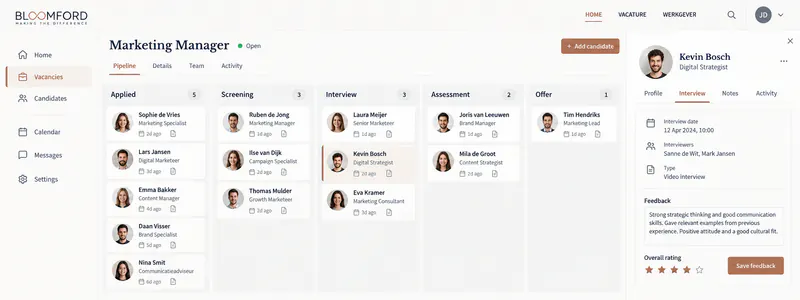
Bloomford · hiring portal
A modular hiring portal replacing manual candidate tracking, delivered module by module without downtime.
Result: Structured Records, not attachments
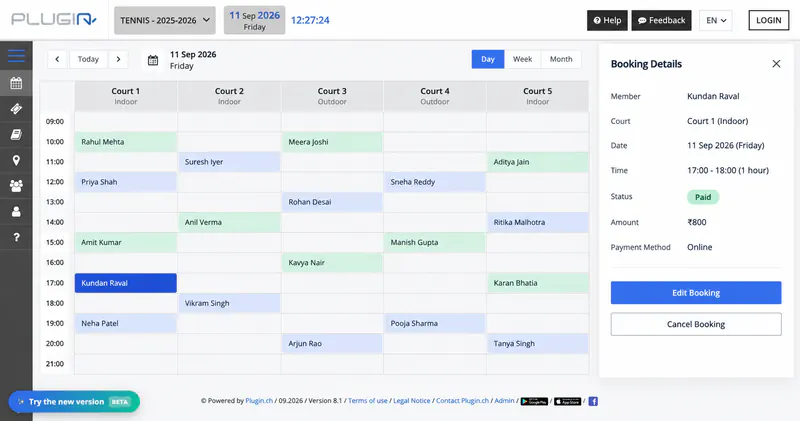
Plugin · club management platform
Court scheduling, memberships, variable pricing and online payments in one system replacing manual admin.
Result: Fewer Double-booked courts
Start here
Discuss the system you need to replace.
Tell us which company in the group it is for, what it replaces and who signs off. Within 48 hours you get a written scope, an architecture recommendation and a price range.
- A written scope with the exclusions listed
- The data rules that bind your system, named
- The name of the engineer who would lead it
- Free, and yours to keep either way
Get your free estimate
Three quick questions: scope, approach and a price range back within 48 hours. No sales call required first.
FAQs · Kuwait
Frequently asked questions from Kuwait teams
Data rules, the Sunday-to-Thursday week, pricing and who owns what, answered plainly.
Ask us directly →Next step
Start your Kuwait project.
Send two lines: what the system replaces and which company it serves. A written scope, timeline and price range come back within 48 hours, free either way.