For software, the law turns into features and paperwork:
- Rights requests. People need ways to confirm what you hold, correct it and delete it.
- A copy of the data. People can ask for their data in a portable form they can take elsewhere.
- Opt-outs. People can opt out of targeted advertising, the sale of their data and profiling used for decisions with legal or similarly significant effects, including through browser-level opt-out signals.
- Consent for sensitive data. Sensitive data, such as health or financial information, generally needs the person’s consent before you process it, so the software needs a way to ask for it and record the answer.
- Assessments. Higher-risk processing, such as selling personal data, certain profiling or handling sensitive data like health information, needs a documented data protection assessment.
- Vendor contracts. Anyone processing data on your behalf needs a written contract that sets out what they may do with it.
The Division of Consumer Affairs proposed detailed rules in June 2025, and those proposed rules expired on June 2, 2026 without being adopted. The statute still applies. What is missing is the extra detail the rules would have added, and new rules would need a fresh proposal and comment period. So build to the statute now, and design data handling that can absorb more detail later. Where a decision is legal rather than technical, it belongs with your counsel.
Custom software in New Jersey’s main industries
Three sectors account for much of the demand, and each puts different requirements on a project.
Life sciences
The state’s life sciences sector had about 2,400 establishments and more than 85,000 workers in 2024, according to the New Jersey Department of Labor. Those workers earned $16 billion, or 5.2% of all wages paid in the state. Software here often sits close to regulated processes, so audit trails, access control and documented testing belong in the build from the start. In practice that means a record of who changed which data, and when, for every record that matters, in a form an auditor can read. Decide early which systems fall under regulation, and the formal validation work stays limited to those.
Logistics
The Port of New York and New Jersey moved 5,955,798 loaded twenty-foot equivalent units (TEUs) in 2025, according to the Port Authority’s 2025 annual report. That made it the country’s second-busiest port for loaded TEUs. Software for the warehouses and carriers around it is mostly integration work. It connects a warehouse system to carriers, customs data and customer portals, so shipment data is entered once instead of retyped.
Finance, insurance and older systems
Financial and insurance firms tend to send a new vendor a security questionnaire before a scope document. Access logs, change history and data location should therefore be designed in from the start. Many of these firms also run systems old enough to make change hard. In April 2020, New Jersey’s own governor asked for volunteers who knew COBOL, describing systems that were more than 40 years old. Replacing a legacy system piece by piece, with the old one still running, is usually safer than a single cut-over.
A local firm or a remote team
Both can work, and the right choice depends on the project rather than the map. A firm with people in New Jersey makes sense when the work needs regular on-site time. Examples are workshops on a factory or lab floor, systems that can only be reached inside your network, or stakeholders who won’t join video calls. A remote team makes sense when the work happens in repositories, boards and calls anyway, which describes most software projects today.
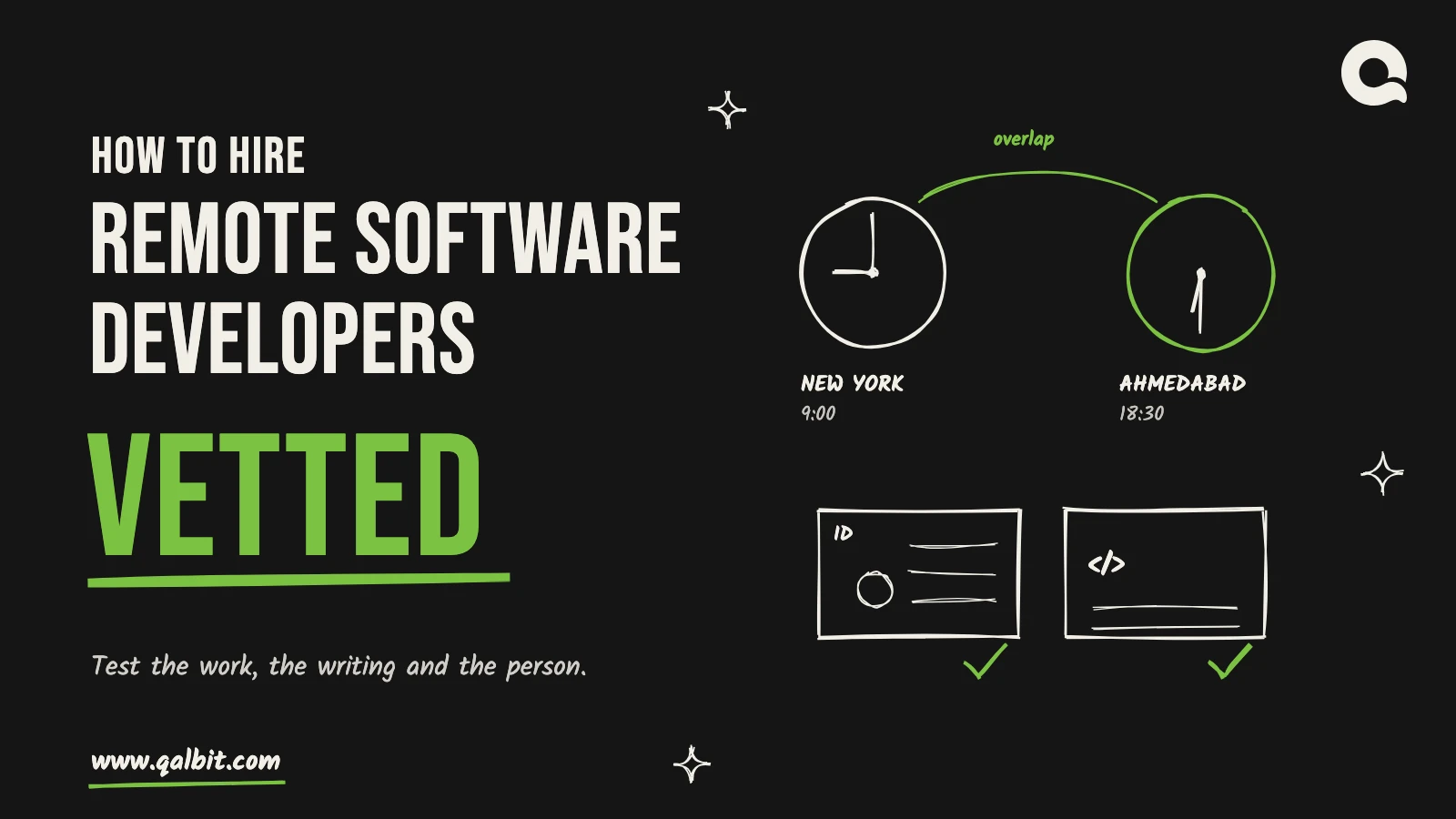
Either way, judge the team on the same evidence. Ask for code they have written, people you can interview, references you can call, and a paid trial on real work. Ask where the contract would be governed and how disputes would be resolved. And ask who exactly will write the code, because the people in the proposal should be the people on the project. The location of an office tells you very little about any of those answers.
Working hours with a remote team
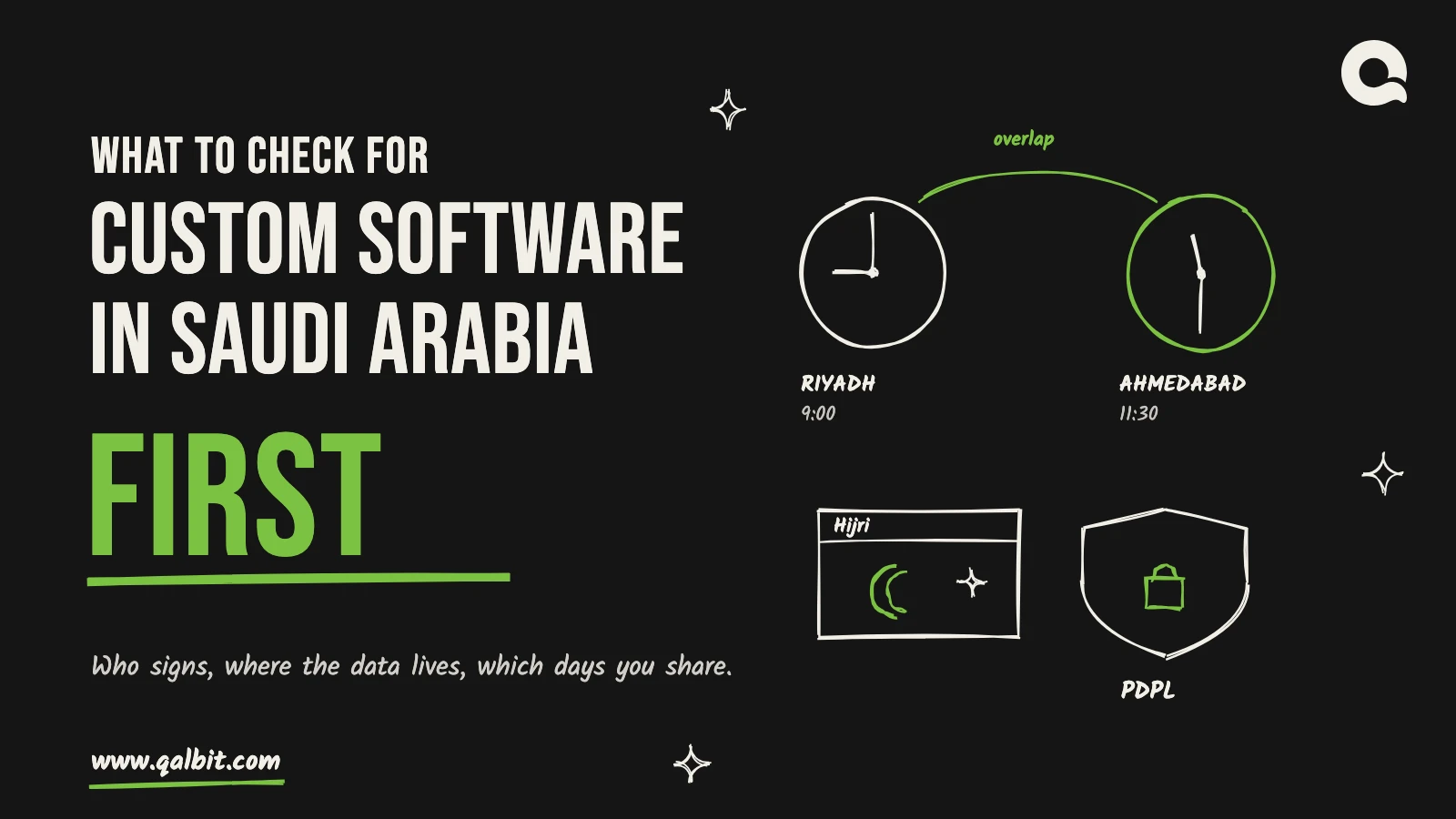
A remote engineering team can work well for a New Jersey company if the overlap is real and written down. Our teams hold four hours of live overlap with Eastern time every working day, from 08:00 to 12:00 ET. Calls happen in your morning, and a written handover arrives before our day ends. Whoever you choose, agree the overlap hours in the contract, along with how quickly messages get an answer outside them. Our checklist for hiring remote software developers covers identity checks, work tests and paid trials. Our comparison of remote, in-house and hybrid teams covers whether remote suits you at all.
Custom software contracts in New Jersey: the points to settle
Most of what protects you is written down before the first sprint. These points each deserve a clause:
- Exclusive use. State that the software is created for your exclusive use. It matters for ownership and, as above, for sales tax, provided that is true of the work, which your tax adviser should confirm.
- Separate lines on the invoice. Keep licences, modification work and installation as separate charges.
- Intellectual property. Assign all code and documentation to you, with repositories and cloud accounts in your company’s name from the first week.
- Data processing terms. Set out what the vendor may do with personal data, in line with the privacy law.
- Acceptance criteria. Define how each milestone is tested and accepted, so payment follows working software.
- Overlap hours and response times. Write down the hours when the team is reachable live and how quickly messages get an answer outside them.
- Governing law and notice. Choose the law and venue that govern the contract, and the notice period that ends it.
Whoever writes the code, the invoice and the contract decide how much tax you pay on top and how well you are protected. Our guide to custom software development pricing compares fixed price, time and materials and dedicated teams, and how each one handles change.
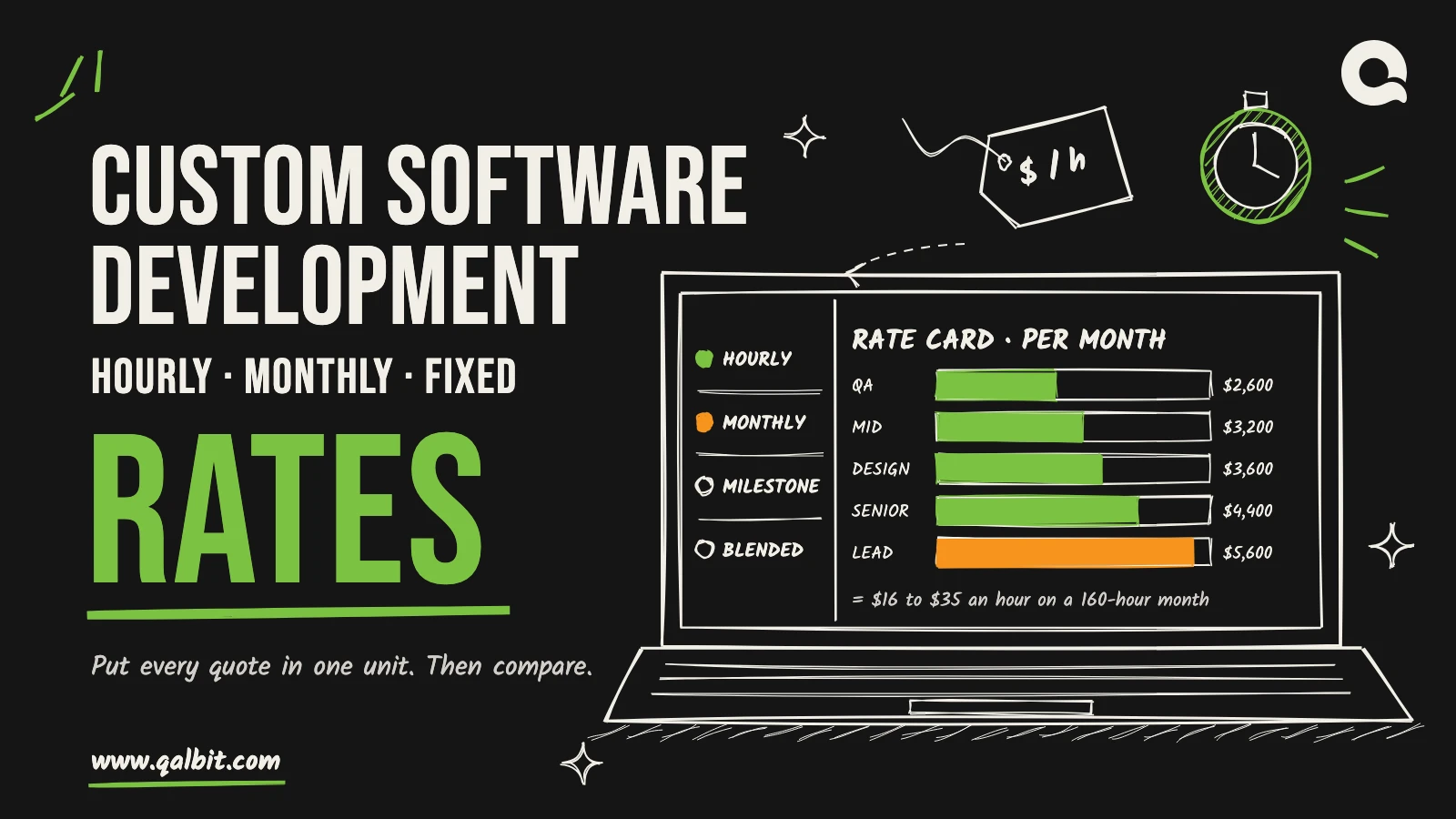
Buying custom software in New Jersey means settling three questions before you sign: how sales tax applies, what privacy law asks and whose hours count. What you buy, and how it is invoiced, decides the first. New Jersey treats software written for one customer’s exclusive use as a non-taxable professional service, while modified off-the-shelf software is taxable unless an exemption applies. The second is the New Jersey Data Privacy Act, in force since January 2025. The third is when the people building your software are actually available to you.
We build software for companies across the US, the UK and the Gulf, and we work Eastern hours for clients on the US East Coast. If you are looking for a custom software development company in New Jersey, our New Jersey page covers how we work with teams there. This post covers the local rules behind any custom software in New Jersey, whoever builds it.
How New Jersey sales tax treats custom software
New Jersey draws a sharp line between software made for you and software made for everyone. The Division of Taxation’s guidance on computer software covers it. Software created for the exclusive use of one customer isn’t prewritten software, and the state treats it as a non-taxable professional service. Prewritten software stays taxable even when someone modifies it for you. There are two exemptions to know. A separately stated, commercially reasonable charge for the modification work is exempt. And prewritten software delivered electronically is exempt when it is used directly and exclusively in the conduct of your business.
The practical point is the invoice. If a vendor bundles licence and customisation into one lump sum, the whole charge can become taxable. Split into separate lines, only part of it is. Installation charges are generally taxable either way.
What the invoice wording can change
Take a project worth $40,000 at New Jersey’s 6.625% sales tax rate. The two off-the-shelf examples assume the licence is delivered on physical media, or is not used directly and exclusively in your business; if it is delivered electronically and used that way, the electronic-delivery exemption above can remove the tax on the licence too. These figures are illustrative, and your own treatment depends on the facts of your contract:
Same software, same work, and nearly $2,000 of difference from how the invoice is written. The guidance on software as a service dates from 2013 and the software bulletin from 2011. Both say later changes in law can override them, so confirm the treatment for your contract with your tax adviser before you sign.
The New Jersey Data Privacy Act and your software
New Jersey’s privacy law has applied since January 15, 2025. It covers businesses that control or process the personal data of at least 100,000 New Jersey consumers. It also covers those handling at least 25,000 consumers’ data if they earn revenue or a discount from selling it. Data processed only to complete a payment doesn’t count toward the first threshold.