Written scope within 48 hours
Travel software development company: inventory disagrees across channels. Guests notice first.
We are a travel software development company building travel and hospitality platforms for operators whose booking availability, payments and guest communication have to agree across every channel: your own site, the OTAs and the phone desk.
A room or seat sold twice across the OTAs, your own site and the phone desk reaches a guest before anyone on your team sees it.
48h
To a written scope
6–10 wks
To first release
0
Downtime at cutover
100%
Code and IP yours
Get your free estimate
Three quick questions: scope, approach and a price range back within 48 hours. No sales call required first.
Trusted by companies worldwide
- Bloomford
- Contractor Plus, Inc.
- Snappy Stats
- Ad Lunam
- Local Buzz
- CyberFind
- Hellory
- 5.0Clutch · 8 client reviews
- 4.9Google · 18 reviews
- Top ratedUpwork · 100+ reviews · 5K+ hours worked
- TopTracker7K+ hours tracked with clients
Where Travel software breaks
Three problems we are called in to fix.
Almost every Travel engagement we take on starts from one of these. Recognise yours and the rest of this page gets more useful.
Symptom 01
Availability disagrees across channels
The OTA, the direct site and the phone desk each hold a different picture of what is left to sell, and a double booking reaches a guest before anyone reconciles it.
One calendar, every channel reads it
Symptom 02
The booking flow loses guests before payment
A slow search, an unclear cancellation policy or a currency the gateway does not support quietly costs more bookings than the commission an OTA charges.
Measured funnel, fixed step by step
Symptom 03
The platform blocks new routes and rates
A new package, a multi-leg itinerary or a seasonal rate rule needs a workaround or a developer who knows the booking engine by heart.
Own the parts that differentiate your offer

What we build for Travel
Six systems that carry a booking from search to stay.
We build the parts that differentiate you and integrate the parts that do not. Nothing here is a plugin workaround.
Direct booking engines
Search, availability and checkout built for speed and conversion, not tied to a template a channel manager fights against.
Channel manager integrations
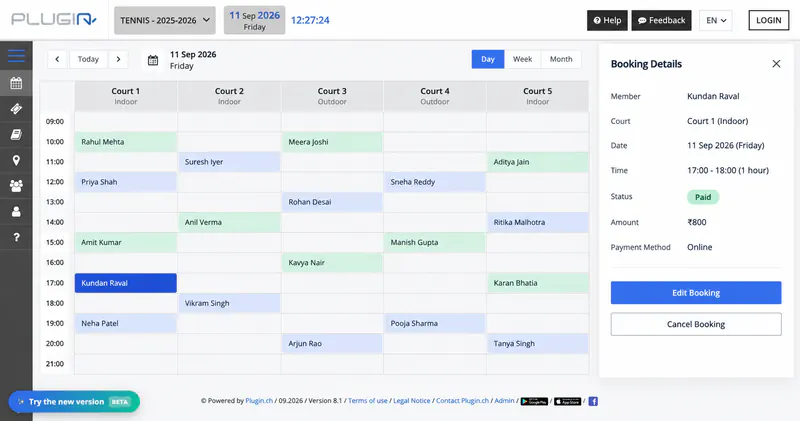
Booking.com, Expedia and GDS connections kept in sync with one real calendar, so nothing sells twice.
Itinerary & multi-leg systems
Flights, transfers, stays and activities modelled as one itinerary, with change and cancellation rules built in.
Payments & multi-currency
Stripe, PayPal and regional gateways, with currency and tax handling that does not fail silently at checkout.
PMS & operations integration
Connecting bookings to the property or fleet management system so front desk and finance see the same numbers.
Analytics & yield reporting
Occupancy, rate performance and channel mix reporting that shows where revenue is actually coming from.
- Next.js
- React
- Node.js
- Laravel
- PostgreSQL
- MySQL
- Stripe
- Channel manager APIs
- GDS integration
- AWS
- REST & GraphQL
- Docker
What changes
The three outcomes Travel clients actually buy.
Nobody commissions software for its own sake. These are the results the work is measured against.
Double bookings stop reaching guests
One calendar behind every channel means a sold room cannot be sold again.
Faster booking flow, more completed bookings
Speed and clarity at checkout is a revenue feature. We measure before and after.
New routes and packages without a rebuild
A clean itinerary model means a new package or destination is configuration, not a project.
How it runs
Audit first, then ship route by route.
Travel cannot afford a cutover mid-season. We release incrementally so bookings never stop.
Booking audit
We map the booking lifecycle end to end and find where availability drifts or guests drop off before payment.
Week 1
Written scope & price
What we would build first, what it costs and what we would deliberately leave until later.
Within 48 hours
Build in sprints
Working software every two weeks, released route by route rather than in one risky cutover.
Sprint by sprint
Measure & extend
Booking conversion, double-booking rate and channel sync accuracy tracked after launch, then the next slice of roadmap.
Post-launch
Proof
Booking and itinerary platform work we scoped, built and still support.
Different sectors, same discipline, and in each case the client owns the code.
Our clients · reviews
Teams who trusted QalbIT
Short feedback from clients and products we work on across web, mobile, SaaS and internal tools.
- Testimonials from long-term custom software development and SaaS product clients.
- Covers ERP systems, B2B marketplaces, booking platforms, and web & mobile app development projects.
- Real text and video reviews from founders, CTOs, and product teams who partnered with QalbIT for delivery.
Video review
Rated 5 out of 5.“Working with QalbIT was an absolute pleasure. They understood our brand vision, delivered a WordPress site that is easy to navigate, and kept communication smooth throughout. I would absolutely recommend them to anybody.”
Imdad Ali KadiwalaFounder, Netzur Written review
Rated 5 out of 5.“QalbIT is a fantastic dev partner. They provide quality work, good communication and go above and beyond. Fantastic work delivered by QalbIT and his team. Can’t give enough credits with regards to how they work and at which speed they do it. Top team.”
Joost HesselberthFounder of Ad Lunam Investments PTY LTD
Written review
Rated 5 out of 5.“QalbIT quickly integrated four platforms quickly. Square, Stripe, PayPal, and Coinbase were all successfully used. The vendor provided an active communication process, maintaining timely deadlines despite the research-heavy service. They also offered post-launch support.”
Roshan SethiaCTO, Contractor Plus, Inc. Written review
Rated 5 out of 5.“The biggest difference has been their flexibility and solution-oriented approach. Rather than pointing out problems, they focus on solving them. I genuinely cannot recall hearing them say, ‘This cannot be done.’ No matter how many changes or updates we send their way, even after long working days, they consistently respond positively and find a way forward. What stands out most is that our relationship has evolved beyond a traditional client-supplier setup and feels more like a partnership. QalbIT takes genuine responsibility for the platform’s functionality, and when bugs are identified, they are addressed without hesitation.”
Gabriell SummerlandCEO, Bluecircle
Written review
Rated 5 out of 5.“They listened to my ideas and came up with a plan for development then executed that plan to completion. I liked their attention to detail and communication skills. Very responsive.”
Osmond MwanyikyCTO, Bocsit Written review
Rated 5 out of 5.“I would recommend QalbIT to everybody. QalbIT has been developing all my front-end & backend systems complete to my requirements. They have excellent technical knowledge and listen very well to the needs of their customers. And above all, they are great people.”
Wouter SantensExecutive Search Consultant at Bloomford
How we work
A product engineering culture built on ownership and clarity.
The habits that decide whether software still works in year three. Here is the honest comparison: what most outsourced engagements look like, and what changes when you work with us.
| The question | The usual answer | At QalbIT |
|---|---|---|
| Who scopes it | A salesperson, then a handover doc | The founder and the engineer who will build it |
| Who writes the code | Whoever is on the bench that month | Named senior engineers, in our office, no subcontractors |
| What you see weekly | A status deck and a percentage | A working demo and the board it came from |
| When something breaks | A ticket queue and an account manager | The engineer who wrote it, in your timezone overlap |
| If you want to leave | A migration project and a licence conversation | Thirty days notice · repos and IP were always yours |
Principle 01
Ownership over ticket-taking
Engineers who ask why before they ask which framework. Scope questions come back before code goes out.
Principle 02
Written over remembered
Scope, estimates and architecture decisions are written down with the trade-off stated. Nobody relies on what was said on a call.
Principle 03
Small over staffed
Senior pods that hold the whole system in their heads beat large mixed teams that need a coordinator to function.
Engagement models
Flexible engagement models.
Choose how you want to work with us based on where your product is today. We help you validate, ship and then scale without forcing you into a one-size-fits-all model, and how we price projects follows the model you pick.
Best for defined scope
Fixed-scope projects
Best when requirements are clear and we can estimate precisely.
- Clearly defined scope, milestones and deliverables.
- Predictable budget with upfront estimates.
- Ideal for MVPs and discrete feature releases.
Works well with good documentation or a short discovery
Most chosen
Dedicated product squad
A cross-functional team that behaves like your in-house product team.
- Stable team for long-term ownership and roadmaps.
- Capacity planned monthly with clear velocity.
- Founder involvement on architecture and key decisions.
When software is core to your business
Best for ongoing work
Time & material / Agile
Ideal for ongoing iterations, R&D and integrations.
- Pay for actual engineering and design time used.
- Flexible backlog and scope, prioritised every sprint.
- Perfect for experiments and proof-of-concepts.
When agility matters more than fixed scope
Services for this industry
Software development services at a glance.
From MVPs to long-term platforms, combine our core and specialised services to design, build and grow products that match how your business really works.
Web Development
Custom web applications that replace the manual processes and outgrown tools quietly consuming a working day every week.
Mobile App Development
Native and cross-platform mobile apps with secure backends, analytics and ongoing support.
Backend Development
Backend development covering REST APIs, integrations, auth and microservices for web and mobile applications.
E-Commerce Development
Custom e-commerce for online stores, B2B portals and marketplaces that are fast, secure and built to convert.
FAQs · Travel
Travel and hospitality software development: frequently asked questions
Channel sync, booking engines, payments and what happens to bookings while we build.
Ask us directly →Next step
Stop losing bookings to a lagging calendar. Start shipping.
Send the process that hurts most in two lines. You get a written scope, timeline and price range within 48 hours: free, and yours either way.