59.3°N 18.1°E · Serving Sweden
Custom software development company for Swedish product teams
Swedish product teams and mid-size companies tend to arrive with a clear brief and a low tolerance for a build that is not documented properly: a backend that needs to scale past its first customers, an internal system a growing team has outgrown, or an integration nobody wants to own. We build it as a remote senior team, written down before it is priced.
No office in Sweden, and no on-the-ground Swedish-speaking staff, so we say that plainly. Delivery, calls and documentation run in English, live with you from 09:00 until mid-afternoon.
Working overlap · a normal TuesdayBlue = live together
A 09:00 start in Sweden lands at 12:30 IST in summer and 13:30 in winter, both inside our working day, so a decision made at your first stand-up does not sit idle until tomorrow. Our day closes at 19:00 IST, which is 15:30 your time in summer and 14:30 in winter.
Since 2018
Building software
120+
Projects delivered
50+
Clients worldwide
5.5h+
Typical daily overlap with Ahmedabad
What we build
Custom software and backend systems for Swedish teams.
Swedish buyers tend to arrive knowing exactly what they need, and expect the reasoning behind a decision written down, not just the decision. This page is written for two kinds of brief: product companies in Stockholm, and manufacturers and logistics firms around Gothenburg’s port.
Custom software development
Product and platform builds for teams that need a working system with paying users, not a proof of concept that stalls after the demo.
Laravel · Node.js · React
Internal tools
Production, warehouse and dispatch dashboards for a manufacturer or logistics firm that has outgrown its spreadsheets but does not need an enterprise suite to replace them.
React · REST · role-based access
SaaS and product engineering
Multi-tenant architecture, billing and roles for a product team that needs to onboard its next customer without a rebuild.
Scoped MVP typically from $5,000
System integrations
Invoicing, payment and reporting systems connected so a number is entered once, including Peppol BIS Billing 3 e-invoices, the recommended format for the electronic invoices Swedish public-sector buyers have required since April 2019.
REST · GraphQL · Peppol
CRM development
A CRM for a B2B sales team, built around its own process, with GDPR erasure that reaches every copy of a contact, backups included.
Custom fields · workflow rules
Cloud and DevOps
AWS in the Stockholm region or Frankfurt, infrastructure as code and staged releases, with the change history a Swedish enterprise buyer will ask for.
AWS eu-north-1 · Docker · CI/CD
Why us
Why Swedish teams work with a remote engineering partner.
A consensus-driven, quality-focused way of working is often said of Swedish teams, and where it holds true it fits well with how we run a project: written decisions, a named engineer, and nothing agreed verbally that should have been in the scope document.
Decisions in writing, not in a meeting nobody minuted
A written scope with the exclusions listed, so what gets built is what was actually agreed, not what someone remembers agreeing to.
Most of your day, not a narrow window
Three and a half to four and a half hours apart, so your day is live with ours from 09:00 until 14:30 in winter and 15:30 in summer, and a question raised at your first stand-up reaches engineers who are already at work.
GDPR treated as a design decision
Retention, deletion and access logging are settled in the data model before the first sprint, not retrofitted once IMY, Sweden’s data protection authority, asks a question.
You keep the code and the access
Repositories and AWS accounts sit in your company’s name from the first commit, in the EU region you choose. If we part ways, the system stays with you, documented in English.
Transfers to India set up first
India has no EU adequacy decision, and an engineer there reading EU-hosted data still counts as a transfer. So the mechanism, normally the EU standard contractual clauses, is settled with your DPO before any personal data moves.
Process
How a Sweden engagement runs.
The same five stages wherever we work, timed so every live session falls between your 09:00 start and mid-afternoon, when both teams are in.
Discover & define
One call to map the problem and the systems it touches, where personal data will be hosted, and which of it our engineers ever need to see.
Week 1
Design & validate
A clickable prototype reviewed with the people who will use it, so feedback lands on real screens before code is written.
Weeks 2–3
Build in sprints
Working software every two weeks, demoed live on a call you attend rather than reported after the fact.
Sprint by sprint
Launch & stabilise
Release to eu-north-1 or the EU region you chose, data migrated where needed, and a rollback path tested before real users depend on it.
Launch week
Improve & extend
Monitoring, then the next roadmap item, picked from live usage data rather than the original wish list.
Ongoing
Engagement models
Fixed scope, a dedicated team, or staff augmentation.
A Swedish product team usually starts fixed-scope, with a scoped MVP from $5,000, then moves to a dedicated team once the roadmap outgrows a single project.
Fixed-scope project
A defined first release, priced in writing with its exclusions named. Best for a build with a clear boundary and a date attached.
Fixed price · 6–14 weeks
Dedicated product team
A standing product team from $3,200 per engineer per month, working to your board and your definition of done as the roadmap grows.
Monthly · 30 days notice
Staff augmentation
Senior engineers added to your own squad and its rituals, in English, for when the gap is hands rather than direction.
Per engineer · per month
Technologies
Four layers, chosen so the fifth engineer can still read them.
Swedish teams tend to ask why a technology was chosen, so each layer here is plain, proven and written up, with the reasoning kept beside the code for whoever maintains it next.
- 01
Interface
What your users touchInterfaces built for a product that has to onboard its next customer without a redesign.
- 02
Application
Where the rules liveBusiness rules documented in English, with the decision record beside them, so a new hire in Stockholm can pick them up.
- 03
Data
What you cannot afford to loseRetention and erasure rules set per field before the first record, so a GDPR request reaches the backups too.
- 04
Delivery
How it reaches productioneu-north-1 in Stockholm when you want the data kept in Sweden, every release staged and reversible.
Already on a stack of your own? We extend it rather than start over, and the architecture review records that choice and its reasons before anyone touches a repository.
Review my stack →Case studies
Real systems shipped with QalbIT.
Two builds close in shape to the product and backend work this page describes: a vendor decision platform and a club-management product, both still running in production. Either can be walked through on a morning call.
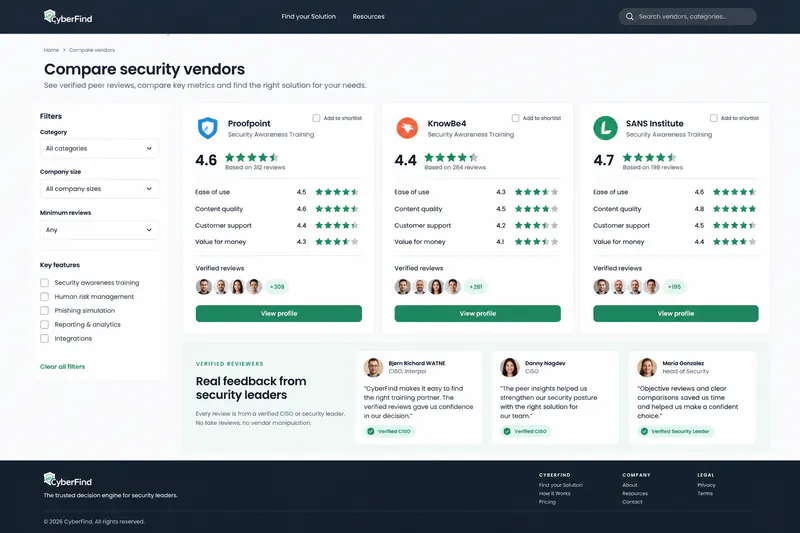
CyberFind · vendor decision engine
A decision-support platform where 500+ verified CISOs compare vendors on evidence.
Result: 500+ Verified CISOs
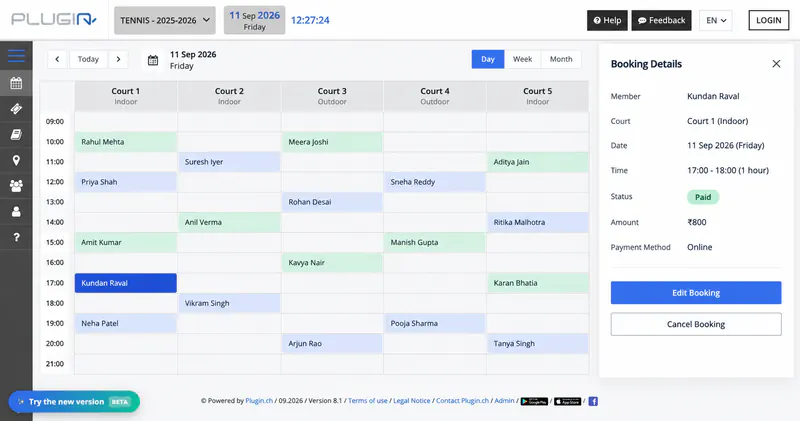
Plugin · club management platform
Court scheduling, memberships, variable pricing and online payments in one system replacing manual admin.
Result: Fewer Double-booked courts
Start here
Discuss the system you need to build.
Tell us the problem and the constraint nobody can move. A written scope, the architecture we would choose and a price range for your board follow inside 48 hours.
- A written scope with the exclusions listed
- An architecture recommendation, not a sales deck
- The name of the engineer who would lead it
- Free, and yours to keep either way
Get your free estimate
Three quick questions: scope, approach and a price range back within 48 hours. No sales call required first.
FAQs · Sweden
Questions Swedish teams ask before they start
Overlap hours, GDPR, budgets and who owns what, answered plainly.
Ask us directly →Next step
Start your Sweden project.
Two lines about the product and where its data must live are enough. In return, inside 48 hours: a written scope, a timeline and a price range in English, to keep whether or not you go ahead.