24.7°N 46.7°E · Serving the Kingdom
Custom Software Development Company for Saudi Arabia
Riyadh, Jeddah, Medina, Mecca and Dammam each run on their own mix of government, trade, visitor-services and industrial work. QalbIT builds the custom software behind all five: internal systems, backend platforms and CRM, engineered by one senior remote team on Saudi hours.
No office and no legal entity in the Kingdom, stated plainly on every city page below. What carries across all five is the ZATCA e-invoicing work, the PDPL data-protection position, and a written scope agreed before anyone prices a project.
Working overlap · a normal TuesdayBlue = live together
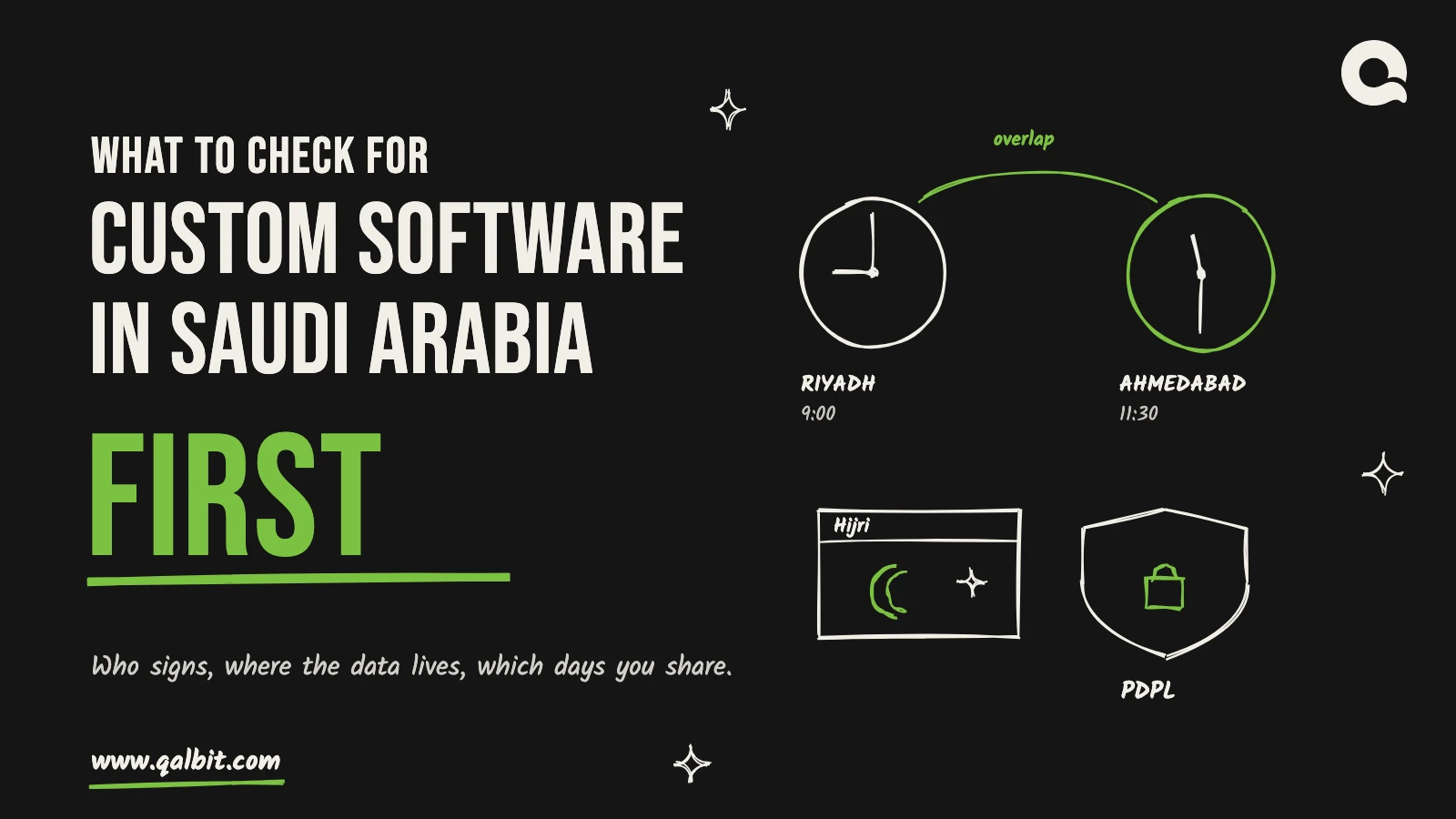
Saudi Arabia and Kuwait share the same UTC+3 offset, so the working day we already keep for the Gulf covers all five Saudi cities in full.
8+
Years in custom software
120+
Projects delivered
50+
Clients worldwide
0
Subcontractors
What we build
Custom software for companies operating across Saudi Arabia.
In the Kingdom, invoices clear through ZATCA’s Fatoora platform and personal data answers to PDPL, overseen by SDAIA. That is the digital-government side of Vision 2030, and it reaches every city the same way.
Custom software development
End-to-end platforms, internal tools and B2B portals for Saudi companies replacing spreadsheets and licensed software that never fit the business.
Laravel · Node.js · React
ZATCA-compliant e-invoicing
Phase 1 (December 2021) ended handwritten invoices. Phase 2 connects your system to Fatoora wave by wave: Wave 25 covers VAT-subject revenue above SAR 187,500 in any year from 2022 to 2025, live by 1 February 2027.
Phase 2 · Wave 25
PDPL-ready data handling
PDPL reaches processors outside the Kingdom, us included. You stay the controller, and any personal data that leaves Saudi Arabia moves under Article 29 with SDAIA’s Standard Contractual Clauses, signed before the build.
Article 29 · SCCs
CRM and reporting tools
Arabic and English in the same record, right-to-left screens and reports that read correctly in both, for sales and operations teams that work in two languages.
Arabic · English · RTL
Cloud and DevOps
Hosting chosen around your data: inside the Kingdom where PDPL or a client contract requires it, regional where it does not. Every release is staged and can be reversed, wherever it runs.
AWS · Docker · CI/CD
Dedicated product teams
A standing group of named QalbIT engineers running your product’s roadmap release by release, wherever in the Kingdom your team sits.
Monthly · 30 days notice
Why us
Why Saudi companies choose one remote team across five cities.
A Saudi build succeeds or fails on the same things wherever in the Kingdom it runs: an honest office claim, a real overlap and a data-protection position settled before the first sprint.
One contract, one team, five cities
The same engineers, the same written-scope discipline and the same PDPL position whether the work is in Riyadh, Jeddah, Medina, Mecca or Dammam.
A full working day, not a morning window
The whole Kingdom keeps one clock, UTC+3, and a Sunday-to-Thursday week. Our Ahmedabad team already works Gulf hours, so demos and sign-offs land inside your week rather than ours.
We say what we are not
No Saudi office, no local entity and no commercial registration. That rules us out of bidding on Etimad, where government tenders run, and we say so before anyone prices the work.
You keep the code and the access
Your company owns the repository from the first commit, and the cryptographic certificates ZATCA issues for your invoicing are registered to you, not to us. End the engagement and nothing needs handing back.
Process
One process, run the same way in all five cities.
The city does not change how the work runs. What changes is the sector detail each city page covers.
Discover & define
We map today’s workaround, then confirm which ZATCA wave your revenue puts you in and what personal data the system will hold.
Week 1
Design & validate
A clickable prototype, in Arabic and English where the product needs both, tested with the people who will use it before production code starts.
Weeks 2-3
Build in sprints
Two-week sprints, each closing on a live demo booked inside the Saudi working week.
Sprint by sprint
Launch & stabilise
Where the system issues invoices, its units are onboarded with ZATCA and pass compliance checks before go-live. Data comes across from the old system, with a rollback path ready.
Launch week
Improve & extend
Once real Saudi transactions are flowing: monitoring, an alert on every invoice Fatoora rejects, and the next roadmap release.
Ongoing
Engagement models
Fixed scope, staff augmentation or a dedicated team.
The same three models in every city we work in. The choice is made on scope and risk, not on which of the five cities the work sits in.
Fixed-scope project
One system, a fixed price and the exclusions listed. The usual fit for a ZATCA retrofit, where the wave deadline sets the end date.
Fixed price · 6-14 weeks
Dedicated product team
A standing team for a product that keeps growing after launch, sized up or down as the roadmap changes.
Monthly · 30 days notice
Staff augmentation
QalbIT engineers placed inside your own Saudi team, in your tools and your code reviews, for when you have a tech lead and need capacity.
Per engineer · per month
Technologies
Four layers, chosen so the fifth engineer can still read them.
The same stack across all five cities, so a team built for Riyadh can pick up work in Dammam without relearning the architecture.
- 01
Interface
What your users touchScreens that work in Arabic and English, laid out right to left where they need to be, for staff who use them all day.
- 02
Application
Where the rules liveVAT, approval and invoice rules kept in one place, readable by whoever maintains them next.
- 03
Data
What you cannot afford to loseWhat may leave the Kingdom and what must stay is decided before the first table exists.
- 04
Delivery
How it reaches productionStaged releases, each with a rollback, timed around your Sunday-to-Thursday week.
Already on an ERP, an accounting product or an e-invoicing provider? We connect to it first, and suggest replacing it only when the connection costs more than the rebuild.
Review my stack →Case studies
Case studies closest to Saudi engagements.
Booking and payments at volume, and a centralised scheduling system replacing spreadsheets: production work closest in shape to what the five Saudi cities need. Full write-ups are available on request.
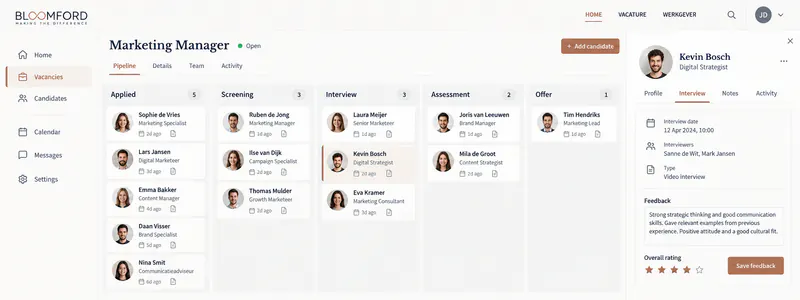
Bloomford · hiring portal
A modular hiring portal replacing manual candidate tracking, delivered module by module without downtime.
Result: Structured Records, not attachments
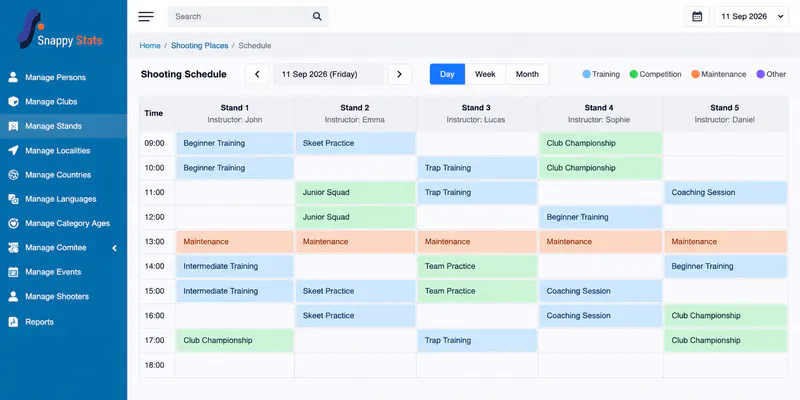
Snappy Stats · scheduling web app
Centralised scheduling that replaced spreadsheets for a growing shooting academy.
Result: 80% Fewer double bookings
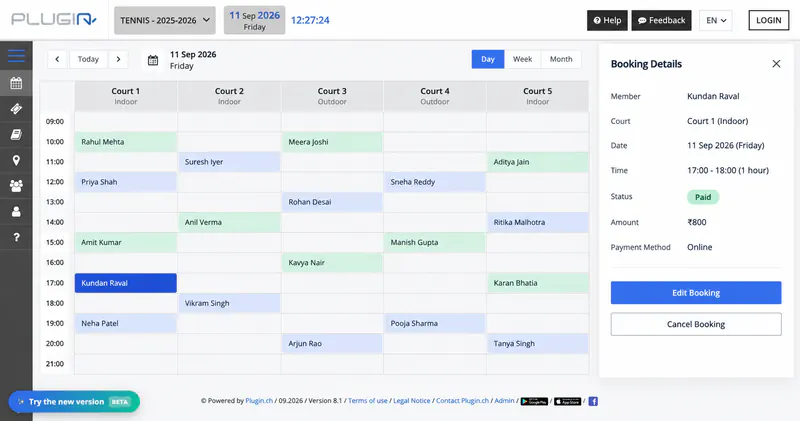
Plugin · club management platform
Court scheduling, memberships, variable pricing and online payments in one system replacing manual admin.
Result: Fewer Double-booked courts
Start here
Discuss your Saudi Arabia project.
Name the city, the system you want replaced, and whether a ZATCA wave date or a PDPL review is setting your timeline. You get a written scope, an architecture recommendation and a price range within 48 hours.
- A written scope with the exclusions listed
- An architecture recommendation, not a sales deck
- The name of the engineer who would lead it
- Free, and yours to keep either way
Get your free estimate
Three quick questions: scope, approach and a price range back within 48 hours. No sales call required first.
FAQs · Saudi Arabia
Frequently asked questions about working with QalbIT in Saudi Arabia
How one remote team covers five cities, and the regulatory questions that come up regardless of which one you are in.
Ask us directly →Next step
Start your Saudi Arabia project.
Two lines about your project and which city it is in is enough. You get a written scope, timeline and price range within 48 hours: free, and yours either way.