Digital transformation · Modernisation & automation
Digital transformation services: legacy systems modernised, module by module.
A digital transformation partner for modern, software-driven businesses. We modernise the systems your company already runs on: legacy software, manual processes and disconnected tools, one working release at a time, without stopping operations.
No big-bang cutover. Each module goes live and proves itself before the next one starts.
Audit first
Systems & process review
Module by module
No big-bang cutover
Your data, migrated
Reconciled & verified
Since 2018
Building operational systems
Get your free estimate
Three quick questions: scope, approach and a price range back within 48 hours. No sales call required first.
Trusted by companies worldwide
- Bloomford
- Contractor Plus, Inc.
- Snappy Stats
- Ad Lunam
- Local Buzz
- CyberFind
- Hellory
- 5.0Clutch · 8 client reviews
- 4.9Google · 18 reviews
- Top ratedUpwork · 100+ reviews · 5K+ hours worked
- TopTracker7K+ hours tracked with clients
Who this is for
For leaders whose software has stopped keeping up with the business.
The tools that ran the company at its old size are usually the constraint at its new one. Digital transformation for a small or mid-sized business is not a programme of years. It is replacing them in the order that returns the most, not all at once.
A good fit
The systems are holding the business back
- Core processes still run on spreadsheets and email threads.
- Software nobody wants to touch because the original team left.
- The same data is entered into three systems by hand.
What changes
Operations that run on software, not memory
- One system of record instead of four partial ones.
- Routine approvals and handoffs automated end to end.
- Reporting leadership trusts without a manual reconciliation.
Not a fit
When we will say so
- An off-the-shelf product already fits the process closely.
- The real blocker is process ownership, not software.
- Nobody internally can make decisions during rollout.

Services & capabilities
Digital transformation services and capabilities.
Eight areas we are usually brought in for: legacy system modernisation, business process automation, integration, data and cloud migration. The audit decides which ones matter for you and in what order.
Legacy system modernisation
Old business systems rebuilt or re-platformed module by module, without a big-bang cutover.
Rebuild · Re-platform
Process automation
Manual, spreadsheet-driven workflows turned into software your team actually uses daily.
Workflow · Approvals
Custom ERP & CRM
Operations, sales and finance in one system built around how your business really works.
Operations · Finance
Systems & API integration
ERP, CRM, accounting, logistics and payment systems connected so data stops being re-keyed.
REST · Webhooks · ETL
Data migration
Years of records moved from legacy databases and spreadsheets, reconciled and verified.
Migrate · Reconcile
Cloud migration
On-premise and shared hosting moved to AWS, Azure or GCP with monitoring and backups in place.
AWS · Azure · GCP
Customer & partner portals
Self-service portals that take routine requests off email and out of your inbox.
Self-service · Roles
Reporting & dashboards
One source of numbers leadership trusts, instead of four exports reconciled by hand.
BI · Dashboards
How transformation runs
The digital transformation process: from mapping to rollout in five stages.
Map process & systems
We sit with the people doing the work and document how it actually runs today, not how the manual says.
Prioritise by return
Each candidate module scored on cost, risk and time saved. You approve the order before we build.
Build and migrate one module
One workflow replaced at a time, with its data migrated, reconciled and verified against the old system.
Train and go live
Your team trained on the real system, running in parallel until the old process can be switched off.
Measure, then repeat
Time saved and error rates measured after each release, before the next module starts.
Digital transformation cost & structure
Digital transformation cost and programme structure.
Most programmes start with a fixed-price audit, then run module by module, so budget is approved against a plan you have already seen working, and the first module usually pays for itself before the second is quoted. Each module follows the process from first call to release that every QalbIT build runs on.
Start here
Process & systems audit
Two to three weeks mapping workflows, systems and data, ending in a prioritised roadmap with costs.
Fixed price · lowest risk
Most chosen
Module by module rollout
Each module quoted, built, migrated and live on its own. Budget approved one step at a time.
Fixed scope per module
Ongoing
Dedicated program team
A standing squad for multi-year programmes, with capacity planned monthly and support included.
Monthly capacity
The first module
The first module, from audit to switch-off.
Map, build, migrate, run in parallel, then switch the old process off.
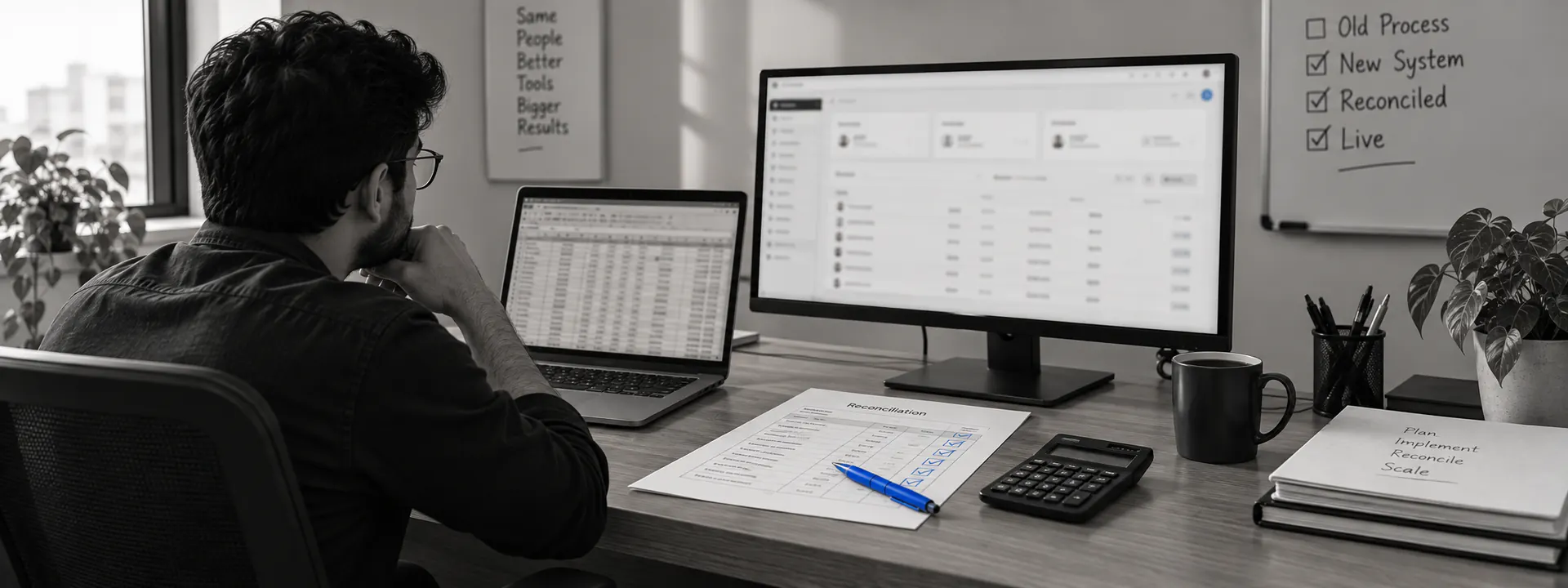
Every programme starts with two to three weeks mapping how the work really runs today, then a roadmap with the modules ranked by return. The first one is built, its data migrated and reconciled, and run in parallel with the old process until your team says it can be switched off, usually inside ten weeks.
What you see
A written roadmap with costs, a demo every sprint, a reconciliation report your finance team signs, and a training session before go-live, then the time saved and error rate, measured before the next module starts.
Weeks 1–3
Process and systems audit, roadmap ranked by return
Weeks 4–8
First module built, data migrated and reconciled
Week 9
Parallel run and training on the real system
Week 10
Old process switched off; time saved measured
- Laravel
- Next.js
- PostgreSQL
- AWS
- REST APIs
Case studies & outcomes
Digital transformation case studies and outcomes.
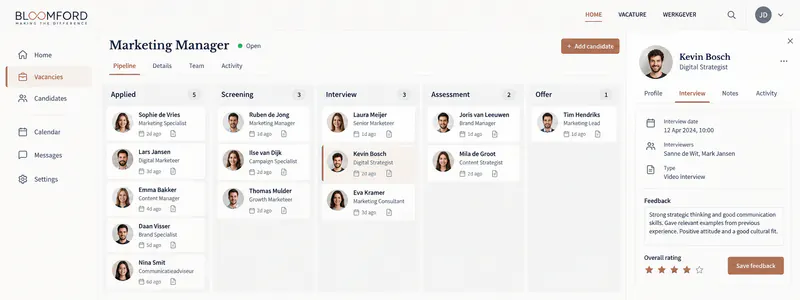
Businesses whose operations moved off spreadsheets and legacy tools onto systems their teams use daily.
Our clients · reviews
Teams who trusted QalbIT
Short feedback from clients and products we work on across web, mobile, SaaS and internal tools.
- Testimonials from long-term custom software development and SaaS product clients.
- Covers ERP systems, B2B marketplaces, booking platforms, and web & mobile app development projects.
- Real text and video reviews from founders, CTOs, and product teams who partnered with QalbIT for delivery.
Video review
Rated 5 out of 5.“Working with QalbIT was an absolute pleasure. They understood our brand vision, delivered a WordPress site that is easy to navigate, and kept communication smooth throughout. I would absolutely recommend them to anybody.”
Imdad Ali KadiwalaFounder, Netzur Written review
Rated 5 out of 5.“QalbIT is a fantastic dev partner. They provide quality work, good communication and go above and beyond. Fantastic work delivered by QalbIT and his team. Can’t give enough credits with regards to how they work and at which speed they do it. Top team.”
Joost HesselberthFounder of Ad Lunam Investments PTY LTD
Written review
Rated 5 out of 5.“I would recommend QalbIT to everybody. QalbIT has been developing all my front-end & backend systems complete to my requirements. They have excellent technical knowledge and listen very well to the needs of their customers. And above all, they are great people.”
Wouter SantensExecutive Search Consultant at Bloomford Written review
Rated 5 out of 5.“They listened to my ideas and came up with a plan for development then executed that plan to completion. I liked their attention to detail and communication skills. Very responsive.”
Osmond MwanyikyCTO, Bocsit
Written review
Rated 5 out of 5.“QalbIT quickly integrated four platforms quickly. Square, Stripe, PayPal, and Coinbase were all successfully used. The vendor provided an active communication process, maintaining timely deadlines despite the research-heavy service. They also offered post-launch support.”
Roshan SethiaCTO, Contractor Plus, Inc.
Why QalbIT
Why businesses pick QalbIT for transformation work.
Transformation fails on rollout far more often than on code. We plan for the switchover, the training and the data, not just the build.
Operations first, software second
We map how the work is really done before proposing a system: the process drives the build, not the reverse.
No big-bang cutovers
Each module goes live on its own and runs in parallel until the old process can be switched off safely.
Data migrated and reconciled
Years of records moved, verified line by line, and signed off against the legacy system before go-live.
Your team trained to own it
Training and documentation are part of every release, so the system does not depend on us afterwards.
Fixed scope per module
Budget approved one module at a time against a plan you have already seen deliver.
Eight years of systems work
ERP, CRM, portals and integrations delivered since 2018 across manufacturing, hospitality, HR and services.

How we work
A product engineering culture built on ownership and clarity.
The habits that decide whether software still works in year three. Here is the honest comparison: what most outsourced engagements look like, and what changes when you work with us.
| The question | The usual answer | At QalbIT |
|---|---|---|
| Who scopes it | A salesperson, then a handover doc | The founder and the engineer who will build it |
| Who writes the code | Whoever is on the bench that month | Named senior engineers, in our office, no subcontractors |
| What you see weekly | A status deck and a percentage | A working demo and the board it came from |
| When something breaks | A ticket queue and an account manager | The engineer who wrote it, in your timezone overlap |
| If you want to leave | A migration project and a licence conversation | Thirty days notice · repos and IP were always yours |
Principle 01
Ownership over ticket-taking
Engineers who ask why before they ask which framework. Scope questions come back before code goes out.
Principle 02
Written over remembered
Scope, estimates and architecture decisions are written down with the trade-off stated. Nobody relies on what was said on a call.
Principle 03
Small over staffed
Senior pods that hold the whole system in their heads beat large mixed teams that need a coordinator to function.
The services a programme draws on
Software development services at a glance.
From MVPs to long-term platforms, combine our core and specialised services to design, build and grow products that match how your business really works.
ERP Development
Custom ERP for inventory, purchase, production, finance and HR: modular systems for SMEs that outgrew spreadsheets and rigid packages.
CRM Development
Custom CRM software: sales pipelines, customer 360 views, vertical CRMs and CRM–ERP integrations built around how your team sells.
Custom Software Development
End-to-end custom software development services for web, mobile and cloud: from a first release to a long-term platform, with clear costs and ongoing support.
FAQs · digital transformation
Frequently asked questions about digital transformation with QalbIT
What it costs, how long it takes, how programmes are sequenced, what happens to your existing data, and how disruption is kept out of daily operations.
Book a systems audit →Next step
Ready to modernise the systems your business runs on?
Tell us which process hurts most. You get a proposed first module, sequence and price range within 48 hours.