Engagement models · How we work together
Software development engagement models: fixed price, time and material, or a dedicated team.
Three ways to work with QalbIT on custom software and SaaS projects: fixed cost, time and material, or a dedicated team. Which one fits depends on how settled your scope is, not on which is easiest to sell.
Tell us the roadmap and we will recommend one honestly, including when a smaller engagement is the right answer.
3 models
Fixed · T&M · Dedicated
Switch anytime
Models can change mid-project
30 days notice
On monthly engagements
Your repos & IP
In every model
Get your free estimate
Three quick questions: scope, approach and a price range back within 48 hours. No sales call required first.
Trusted by companies worldwide
- Bloomford
- Contractor Plus, Inc.
- Snappy Stats
- Ad Lunam
- Local Buzz
- CyberFind
- Hellory
- 5.0Clutch · 8 client reviews
- 4.9Google · 18 reviews
- Top ratedUpwork · 100+ reviews · 5K+ hours worked
- TopTracker7K+ hours tracked with clients
Picking a model
Start from how settled your scope is.
Almost every wrong engagement model traces back to the same mistake: fixing a price on a scope nobody could describe yet. The question is not fixed price versus time and material. It is how much of the work you can already write down. Where you can write all of it down, the fixed-scope model is the honest answer.
Scope is settled
Choose fixed cost
You can describe what done looks like and are willing to freeze it. Price and date agreed before we start.
Scope will move
Choose time and material
You know the direction but expect users to change the details. Priorities reset every sprint.
Scope never ends
Choose a dedicated team
There is a continuous roadmap and retained context matters more than a fixed number.

The three models in detail
Fixed cost, time and material, dedicated team: the details.
What each model covers, who it suits and where it costs you. Switch tabs to compare them side by side, and read the dedicated team model in full if a monthly squad is what your roadmap needs.
Fixed cost
Fixed cost
A defined scope, an agreed price and a delivery date fixed before work starts.
- A first release or a bounded module with a clear definition of done.
- Budgets that must be approved as a single number up front.
- Working with us for the first time and wanting a contained risk.
Least flexible model: if the requirements are still moving, time and material will cost you less overall.
Time & material
Time and material
You pay for the hours actually worked, with scope free to change between sprints.
- Roadmaps where priorities shift as customers respond.
- Discovery, integrations and work that cannot be fully specified in advance.
- Teams who want to steer the backlog week to week.
Needs an engaged product owner on your side: the model rewards clear priorities every sprint.
Dedicated team
Dedicated team
A stable squad working only on your product, billed monthly per person.
- Products with a continuous roadmap and no in-house engineering capacity.
- Long engagements where retained context is worth more than flexibility.
- Scaling work where the same team should keep shipping for months.
Least suited to a one-off module: for a single bounded piece, fixed cost is cheaper.
Side by side
Fixed price vs time and material vs dedicated team.
The same seven questions, answered for each model, so the choice is made on scope and risk, not on the sales pitch. Indicative rates and budget bands for all three sit on our pricing page.
| The question | Fixed cost | Time & material | Dedicated team |
|---|---|---|---|
| How you pay | One agreed price, paid by milestone | Hours actually worked, billed per sprint | Per engineer, per month |
| Scope | Frozen and signed before work starts | Reset every sprint | A continuous roadmap you steer |
| Who carries the risk | Us: the price holds | You: the hours are real | Shared: capacity is planned monthly |
| Best for | A bounded first release or module | Discovery, integrations, moving roadmaps | Products with no in-house engineering |
| When scope changes | Quoted in writing as a variation | Re-prioritised at the next sprint | Absorbed by the squad, reviewed monthly |
| How you leave | At the milestone, with what shipped | At any sprint boundary | 30 days notice, no annual contract |
| What you see | Milestone demos and acceptance | Fortnightly demo, report and burn | Fortnightly demo, monthly capacity review |
How an engagement runs
How an engagement runs, from first call to a long-term partnership.
Understand the problem
A call about the outcome you need, the constraints you have, and what already exists.
Proposal and model
Scope, team shape, timeline and the recommended model, in writing, with the reasoning.
Kick-off and access
NDA, your repos and cloud accounts, a named lead and the first sprint planned with you.
Deliver in sprints
Working software every two weeks, a demo you attend and a written report each time.
Review and continue
Capacity, cost and model reviewed at each milestone: models can change as the project does.
The first month
The first month, in any model.
The commercial terms differ; the first four weeks do not.
Whichever model you choose, the first month runs the same way: NDA and access on day one, a named technical lead and a planned first sprint in week one, working software demoed in week two, and a milestone review at the end of the month where the model itself is on the table: a fixed-price first release often becomes a monthly squad once the roadmap is continuous.
What you see
Your repositories and cloud accounts with our commits in them, a demo you attend every two weeks, a written report of what shipped and what is next, and a monthly note on capacity, cost and whether the model still fits.
Day 1
NDA signed, repos and cloud accounts in your name
Week 1
Named lead, kick-off, first sprint planned with you
Week 2
First demo of working software, written report
Week 4
Milestone review: capacity, cost and the model itself

- Jira
- Linear
- Slack
- GitHub
- AWS
Communication & governance
The same governance under every model.
How work is tracked, reviewed and reported does not change with the commercial terms, only the way you pay for it does. Where engineers join your own board and standups under the staff augmentation model, your rituals take over and the named lead stays accountable to you.
Named technical lead
One senior engineer accountable for architecture and code review, not a rotating cast.
Fortnightly demo and report
You see working software, then a written summary of what shipped and what is next.
Your tools, not ours
Jira, Linear, Slack or Teams: we work where your team already works.
Time-zone overlap agreed up front
Four hours of overlap with European or US mornings, full-day for GCC clients.
Changes quoted in writing
Added scope is priced and approved before it is built, in every model.
NDA, IP and access from day one
Your repositories and cloud accounts, your IP, commit access from the first week.
Models in real projects
How engagement models play out in real projects.
Three products, three different commercial shapes, chosen by how settled the scope was when we started.
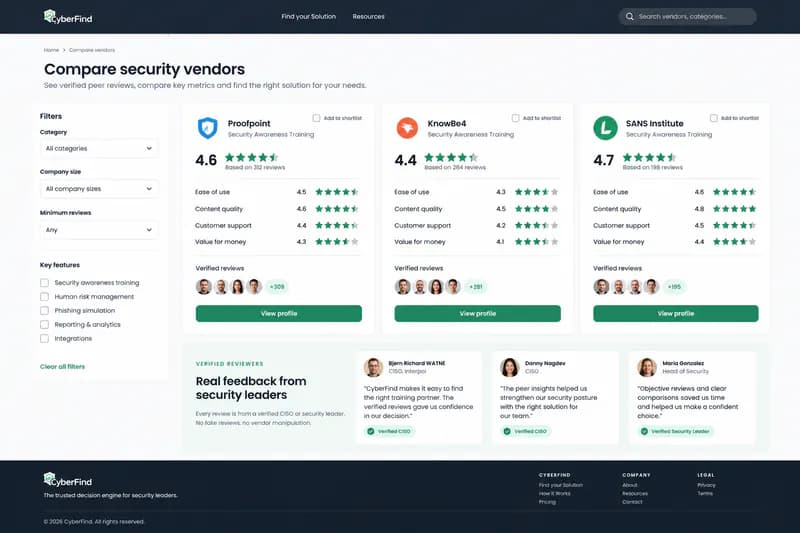
Cybersecurity / B2B SaaS
CyberFind · vendor decision engine
A decision-support platform where 500+ verified CISOs compare vendors on evidence.
Next.js · Node.js · PostgreSQL500+ Verified CISOs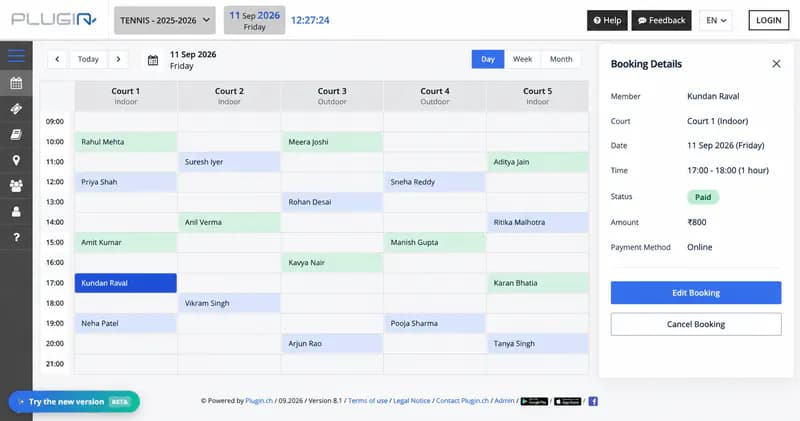
Sports / club management
Plugin · club management platform
Court scheduling, memberships, variable pricing and online payments in one system replacing manual admin.
CodeIgniter · MySQL · StripeFewer Double-booked courts
Our clients · reviews
Teams who trusted QalbIT
Short feedback from clients and products we work on across web, mobile, SaaS and internal tools.
- Testimonials from long-term custom software development and SaaS product clients.
- Covers ERP systems, B2B marketplaces, booking platforms, and web & mobile app development projects.
- Real text and video reviews from founders, CTOs, and product teams who partnered with QalbIT for delivery.
Video review
Rated 5 out of 5.“I would recommend QalbIT to everybody. QalbIT has been developing all my front-end & backend systems complete to my requirements. They have excellent technical knowledge and listen very well to the needs of their customers. And above all, they are great people.”
Wouter SantensExecutive Search Consultant · Bloomford Written review
Rated 5 out of 5.“Excellent work! QalbIT team delivered the project on time, with great quality. Their ability to quickly adapt to new requirements and deliver promptly was impressive. Highly recommend them for Flutter projects.”
Ahmed GFounder at Local Buzz · Consumer app / local discovery
Video review
Rated 5 out of 5.“QalbIT quickly integrated four payment platforms: Square, Stripe, PayPal and Coinbase. Active communication, timely deadlines despite research-heavy work, plus post-launch support.”
Roshan SethiaCTO · Contractor Plus, Inc. Written review
Rated 5 out of 5.“They took a half-finished marketplace, stabilised it, and shipped the modules we actually needed first. The weekly demos meant nothing came as a surprise.”
Abhishek P.Product Lead · B2B marketplace
Written review
Rated 5 out of 5.“QalbIT is a fantastic dev partner. They provide quality work, good communication and go above and beyond. Fantastic work delivered by QalbIT and his team. Can’t give enough credits with regards to how they work and at which speed they do it. Top team.”
Joost HesselberthFounder · Ad Lunam

What we deliver under these models
Software development services at a glance.
From MVPs to long-term platforms, combine our core and specialised services to design, build and grow products that match how your business really works.
FAQs · engagement models
Frequently asked questions about software development engagement models with QalbIT
What the models are, which is cheaper, dedicated team versus staff augmentation, contracts, switching mid-project and what stays the same however you choose to pay.
Ask which model fits →Next step
Not sure which engagement model fits your project?
Describe the work in two lines. You get a recommended model, team shape and price range within 48 hours.